
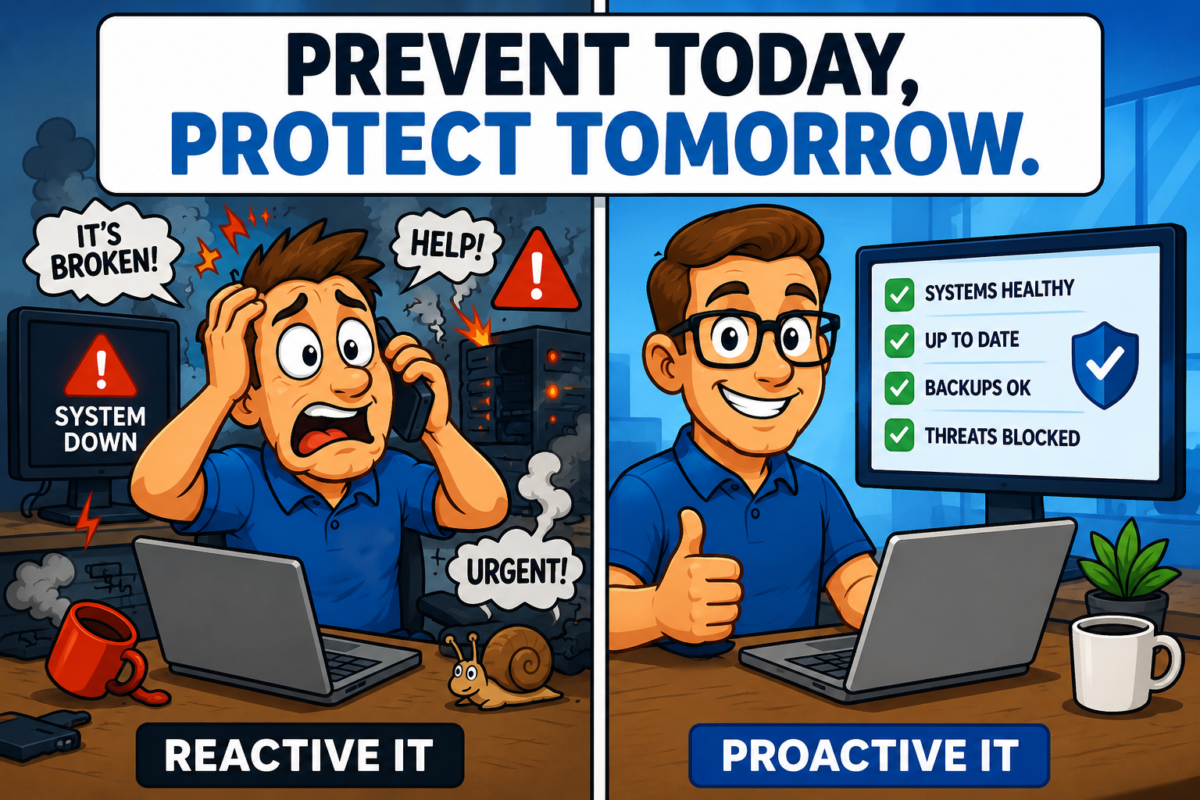
The True Cost of Reactive IT Support
Many businesses don’t realize they’re operating with reactive IT support until something goes wrong.
The server crashes.
A key employee can’t access files.
An email attack slips through.
A software update breaks a critical application.
Only then does the phone ring.
While fixing problems after they occur might seem like a cost-effective approach, the hidden costs of reactive IT often outweigh any short-term savings. Downtime, lost productivity, cybersecurity risks, and frustrated employees all impact your bottom line.
The question isn’t whether problems will happen.
It’s how prepared your business is when they do.
By the Numbers
- 98% of organizations say a single hour of downtime costs more than $100,000, according to enterprise surveys. Even for smaller businesses, downtime can quickly become expensive.
- Employees lose an average of 22 minutes each day dealing with IT issues and interruptions.
- Businesses using proactive monitoring resolve many issues before employees even notice them.
What Is Reactive IT Support?
Reactive IT is exactly what it sounds like.
Technology is repaired only after something breaks.
Instead of continuously monitoring systems, applying updates, identifying security risks, and preventing failures, support is only requested when users experience a problem.
Examples include:
- Calling IT after the server fails.
- Fixing computers only when they become unusable.
- Applying security patches weeks or months after they’re released.
- Investigating backups only after data has been lost.
While this approach may reduce monthly IT costs, it usually increases overall business costs.
The Hidden Costs Businesses Often Miss
Lost Productivity
Every minute employees spend waiting for systems to recover is time they’re not serving customers or completing work.
Small interruptions throughout the day often become far more expensive than one major outage.
Downtime
Unexpected downtime affects far more than technology.
It delays projects.
Interrupts customer service.
Delays invoicing.
Prevents employees from accessing the information they need.
The longer systems remain unavailable, the more expensive recovery becomes.
Increased Cybersecurity Risk
Many cyberattacks don’t happen because businesses lack security tools.
They happen because systems aren’t updated, monitored, or maintained consistently.
Reactive IT often means:
- Missed security patches
- Weak password policies
- Unmonitored endpoints
- Backups that haven’t been tested
- Delayed threat detection
These gaps create opportunities attackers actively look for.
Higher Long-Term Costs
Emergency support almost always costs more than planned maintenance.
Urgent after-hours work, hardware failures, recovery efforts, and business interruption quickly exceed the cost of ongoing proactive management.
The cheapest IT strategy today can become the most expensive one tomorrow.
What Proactive IT Looks Like
A proactive Managed Service Provider (MSP) works to prevent problems before they impact your business.
This typically includes:
- 24/7 system monitoring
- Automated patch management
- Cybersecurity monitoring
- Backup testing
- Technology lifecycle planning
- User support
- Strategic IT planning
Rather than waiting for failures, proactive support continuously reduces risk.
Signs Your Business May Be Operating Reactively
You may be relying on reactive IT if:
- IT is only contacted when something breaks.
- Updates are frequently postponed.
- Downtime has become “normal.”
- Backups haven’t been tested recently.
- Cybersecurity is only discussed after an incident.
- Employees regularly complain about slow systems.
- There is no long-term technology roadmap.
If several of these sound familiar, it may be time to rethink your approach.
How Britec Helps
At Britec, we believe technology should support your business—not interrupt it.
Our Managed IT Services focus on preventing issues before they affect your operations through proactive monitoring, cybersecurity, patch management, strategic planning, and responsive support.
Instead of reacting to problems, we help businesses reduce risk, improve productivity, and plan confidently for future growth.
Final Thoughts
Reactive IT often appears less expensive because the costs are spread across downtime, lost productivity, emergency repairs, and security incidents.
Proactive IT changes that equation by reducing disruptions before they happen.
The goal isn’t simply fixing technology.
It’s helping your business operate more efficiently, securely, and with fewer surprises.
Call to Action
Still waiting until something breaks?
Let’s have a conversation about whether your current IT approach is helping your business—or quietly costing more than you realize.
Book a Discovery Call with Britec today.
FAQ
Is reactive IT support cheaper than managed IT services?
Reactive IT can appear less expensive because you only pay when something goes wrong. However, emergency repairs, downtime, lost productivity, and cybersecurity incidents often make it more expensive over time than a proactive managed IT service.
What is the difference between reactive and proactive IT support?
Reactive IT fixes problems after they occur. Proactive IT continuously monitors, maintains, updates, and secures your systems to prevent many issues before they impact your business.
How do I know if my business needs proactive IT support?
If you’re frequently dealing with unexpected downtime, slow computers, recurring IT issues, or emergency support calls, your business may benefit from a proactive approach. Regular monitoring and maintenance help reduce these disruptions.
Can proactive IT support improve cybersecurity?
Yes. Proactive IT includes services such as patch management, endpoint monitoring, backup testing, vulnerability management, and security updates. These measures help reduce risk and improve your overall cybersecurity posture.
Is proactive IT support only for large businesses?
No. Small and medium-sized businesses often benefit the most from proactive IT because they typically have fewer internal IT resources. Preventing downtime and reducing security risks can have a significant impact on productivity and business continuity.
How much do Managed IT Services cost?
Managed IT Services typically cost between $130 and $180 per user, per month, depending on your business size, cybersecurity requirements, cloud services, backup solutions, and level of support. For many small and medium-sized businesses, this provides predictable IT costs, proactive maintenance, enhanced security, and reduced downtime.