
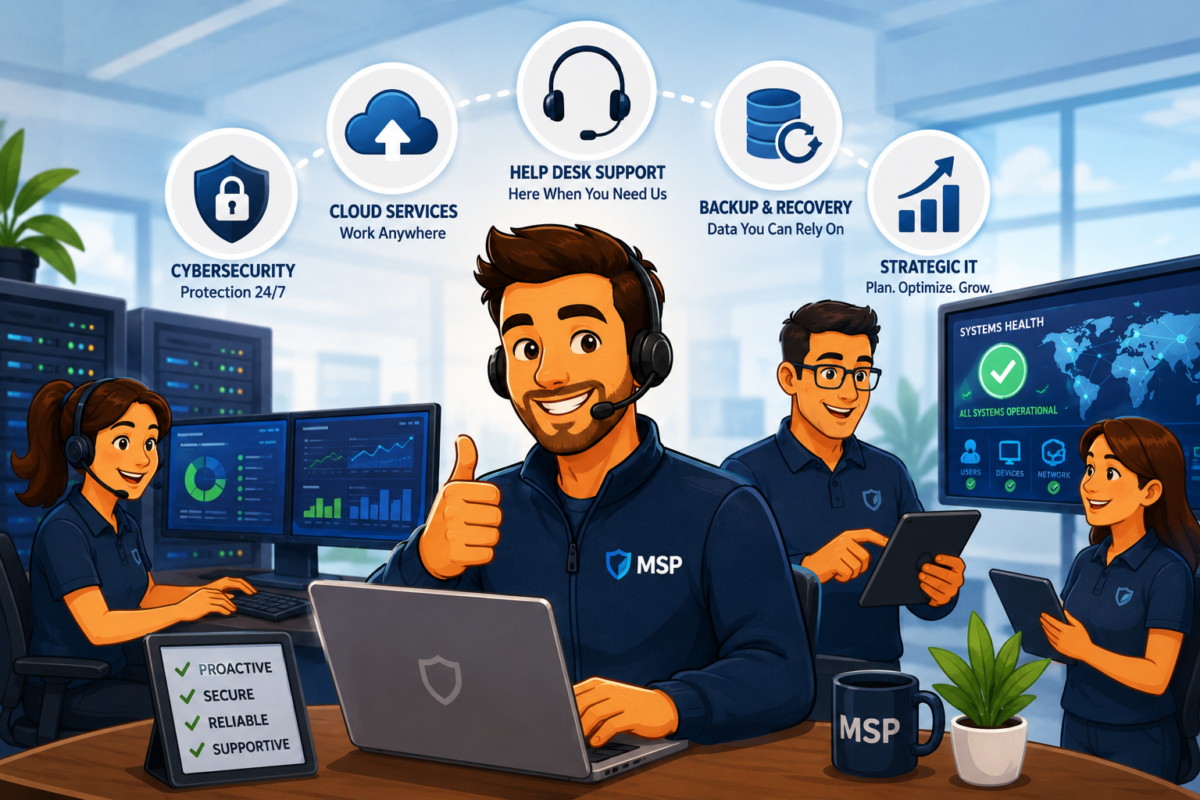
How to Choose the Right MSP for Your Business
Choosing a Managed Service Provider (MSP) is one of the most important technology decisions a business can make.
The right MSP can help improve cybersecurity, reduce downtime, support growth, and provide valuable strategic guidance. The wrong MSP can create frustration, increase risk, and leave businesses struggling to get the support they need.
With so many providers offering similar services, how do you know which MSP is right for your organization?
The answer goes beyond technical expertise. Businesses should look for a partner that understands their goals, communicates clearly, and helps align technology with long-term success.
By the Numbers
- 43% of cyberattacks target small and medium-sized businesses
- More than 60% of breaches involve known vulnerabilities that could have been addressed through proactive management
- The average data breach costs $6,825,520 CAD globally
-
75% of CPA firms report cybersecurity as a top business concern
-
95% of accounting firms handle sensitive client data that could be valuable to cybercriminals
- Downtime can cost businesses thousands of dollars per hour depending on operations
- Businesses that proactively manage technology experience fewer disruptions and stronger operational performance
Start with Business Goals
Technology should support business objectives.
Before evaluating MSPs, organizations should identify what they want technology to accomplish.
Common goals include:
- Improving cybersecurity
- Reducing downtime
- Supporting business growth
- Increasing operational efficiency
- Modernizing legacy systems
- Improving business continuity
The best MSPs focus on business outcomes, not just technical tasks.
Look Beyond Help Desk Support
Many providers focus primarily on fixing problems when they occur.
While support is important, modern businesses need more than reactive troubleshooting.
A strong MSP should provide:
- Proactive monitoring
- Cybersecurity management
- Backup and disaster recovery
- Strategic technology planning
- Vendor management
- Business continuity support
Technology should be managed proactively, not simply repaired when something breaks.
Evaluate Industry Experience
Different industries face different challenges.
A CPA firm has different requirements than a construction company. A distributor has different technology needs than a manufacturer.
Ask potential MSPs:
- Have you worked with businesses like ours?
- Do you understand our industry challenges?
- Can you provide relevant examples or references?
Industry knowledge often leads to better recommendations and stronger long-term outcomes.
Understand Their Cybersecurity Approach
Cybersecurity should be a core component of any MSP relationship.
Ask questions such as:
- How do you monitor for threats?
- What security tools are included?
- How do you handle backups?
- Do you provide security awareness training?
- How do you respond to incidents?
A modern MSP should help reduce risk, not simply install software.
Ask About Strategic Planning
One of the biggest differences between MSPs is how they approach the future.
Some providers focus entirely on day-to-day support.
Others help businesses plan for growth, budget for technology investments, improve processes, and make informed decisions.
The best MSPs become trusted advisors, not just service providers.
Consider Response Times and Communication
Technology issues can affect productivity, customer service, and revenue.
Businesses should understand:
- Response times
- Escalation processes
- Support availability
- Communication practices
Reliable communication is often just as important as technical expertise.
Don’t Choose Based on Price Alone
Technology decisions based solely on cost often become expensive later.
A lower monthly fee may result in:
- Slower response times
- Limited cybersecurity protections
- Reduced strategic guidance
- Increased operational risk
Instead of asking who is cheapest, ask who provides the most value.
What Does an MSP Cost?
Most managed service providers price services on a per-user basis.
For a business with approximately 15 employees, fully managed IT services often cost around $2,000 per month, depending on cybersecurity requirements, backup solutions, cloud services, and support needs.
Typical pricing ranges between $130–$180 per user per month.
Finding a provider that delivers the right balance of security, support, strategic guidance, and long-term value.
The Right MSP Should Feel Like Part of Your Team
The most successful MSP relationships are built on trust.
Your MSP should understand your business, communicate openly, and help support your long-term objectives.
Technology impacts every part of modern business. Choosing a provider that acts as a strategic partner rather than simply a technical resource can have a significant impact on productivity, security, and growth.
Why Businesses Choose Britec
For over 30 years, Britec has helped organizations navigate technology challenges while supporting long-term business growth.
Our team combines managed IT services, cybersecurity expertise, cloud solutions, business continuity planning, and ERP knowledge to help businesses make smarter technology decisions.
We believe technology should help organizations operate more efficiently, reduce risk, and support future growth.
If you’re evaluating your current technology environment or considering a new MSP relationship, schedule a discovery call with Britec to discuss your business goals and technology needs.
Questions to Ask Before Signing with an MSP, A Check list.
✓ How quickly do you respond to support requests?
✓ What cybersecurity services are included?
✓ How often are backups tested?
✓ Do you provide strategic technology reviews?
✓ What industries do you support?
✓ What does onboarding look like?
✓ How do you help businesses budget for future technology investments?
This gives readers something actionable.
FAQ
What should I look for in an MSP?
Look for a provider that offers proactive support, strong cybersecurity, clear communication, and strategic guidance.
Is the cheapest MSP always the best option?
Not necessarily. Value, expertise, and responsiveness often matter more than the lowest monthly cost.
How important is cybersecurity when choosing an MSP?
Very important. Cybersecurity should be a core service, not an optional add-on.
Should my MSP understand my industry?
Yes. Industry experience often leads to better recommendations and support.
What makes a good MSP relationship?
Trust, communication, proactive management, and alignment with business goals.
How often should an MSP review technology strategy?
At least annually, with ongoing discussions as the business grows or changes.